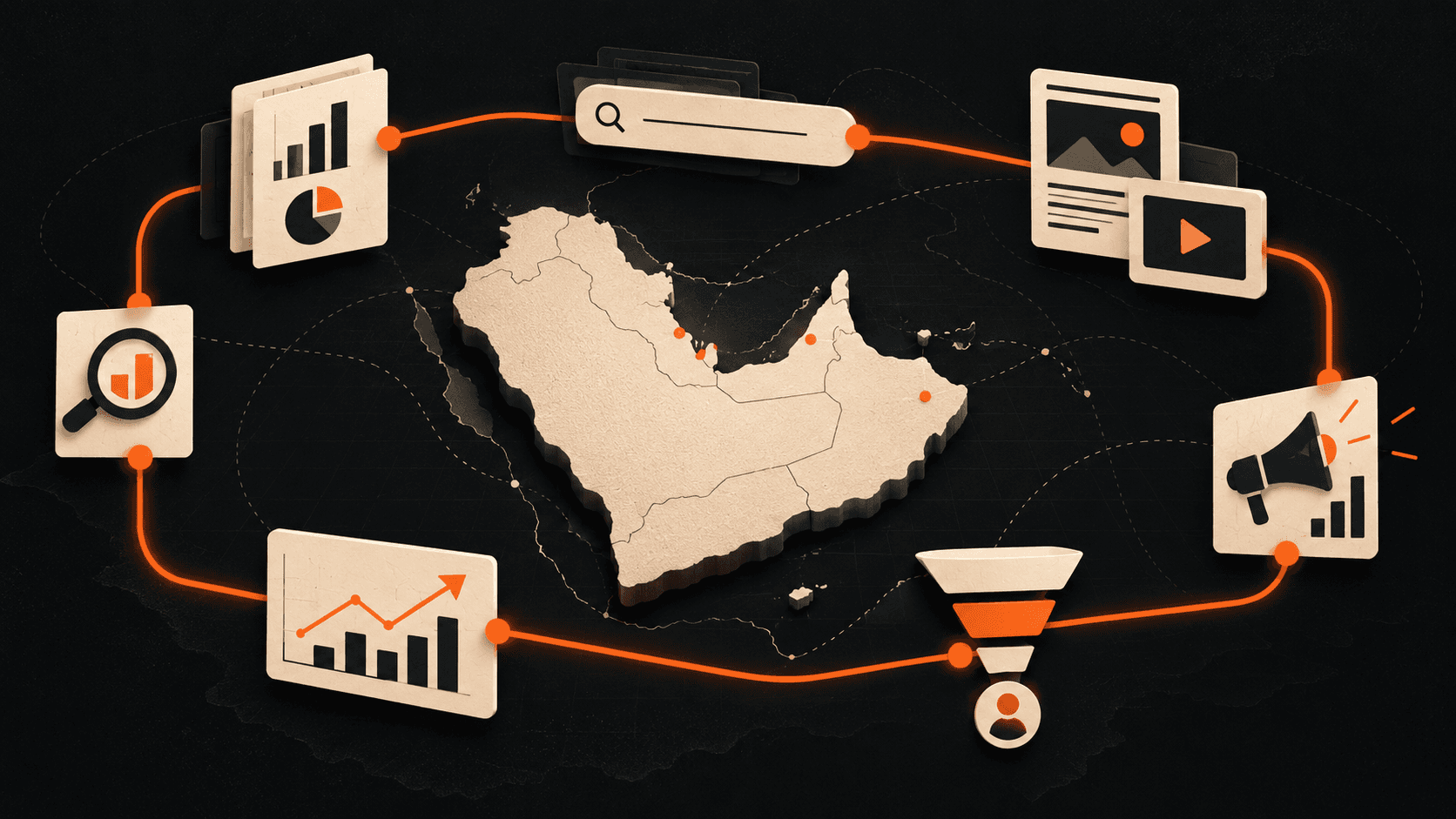
When most businesses hear the term "local search," they immediately picture a neighborhood coffee shop or a local plumber. However, for B2B enterprises, regional SaaS providers, and multi-location companies, capturing geographically targeted search intent is a highly lucrative revenue channel. According to Think with Google, nearly half of all web searches carry some form of spatial or local intent. Yet, many growth-focused companies neglect this channel, assuming national or global optimization is the only path to scale. This guide explores the modern mechanics of local search visibility, how search algorithms evaluate regional authority, and how to structure a localized growth strategy that captures high-converting, bottom-of-the-funnel traffic.
The Shift to Local Entity Graphs
Historically, ranking in the "Local Pack" (the map and three business listings shown in search results) relied heavily on exact-match NAP consistency (Name, Address, Phone number) across directory websites. While baseline consistency is still required, modern local algorithms operate on a complex Local Entity Graph. Search engines no longer just verify your address; they evaluate your "prominence" and "relevance" through co-occurrence signals. If your B2B IT consulting firm in London is frequently mentioned alongside highly trusted local tech publications, regional business chambers, and local industry events, the algorithm builds a strong contextual relationship between your brand entity and that specific geographic radius.
Core Pillars of Regional Search Dominance
To capture local market share, a strategy must bridge the gap between technical infrastructure, localized content, and off-page trust signals.
1. Google Business Profile (GBP) Architecture
Your GBP is not just a listing; it is the cornerstone of your local digital footprint.
Category optimization:Selecting the most accurate primary and secondary categories dictates which search queries trigger your profile.
Product and service payloads:Fully populating your profile with optimized service descriptions, localized FAQs, and product catalogs provides search engines with deep semantic context.
Behavioral signals and post-click satisfaction:Algorithms closely monitor how users interact with your listing. High rates of "click-to-call," "request directions," or meaningful engagement with your GBP posts serve as powerful validation signals that you are fulfilling the searcher's intent.
2. Hyper-Local Content & Topical Clustering
Creating a single "Areas We Serve" page and listing 50 cities is an outdated tactic that provides zero user value. Modern regional visibility requires dedicated topical clusters.
Localized resource hubs:Building distinct, highly valuable pages for specific regions that address local case studies, regional regulations, or localized market data.
Crawl path reinforcement:Using strategic internal linking to connect these localized pages to your primary service pillars, ensuring link equity flows efficiently and search bots understand the geographical relevance of your offerings.
Explore our approach to semantic content mapping in our SEO strategy framework
3. Unstructured Citations & Local Digital PR
Beyond standard directories like Yelp or YellowPages, the real needle-movers in 2026 are unstructured citations.
Contextual placements:Earning mentions in local news outlets, regional industry blogs, and community sponsorships.
Review velocity and sentiment:It is not just about having a 5-star rating. Search engines use NLP to parse the text within your reviews. When clients naturally mention specific services and locations in their reviews (e.g., "The best cloud migration service in Dubai"), it directly strengthens your local topical authority.
Delivery Models: Scaling Local Visibility
Executing local search optimization changes drastically whether you are a single-office consultancy or a brand with 50 regional branches. Traditional agency retainers often struggle to scale this efficiently.
Subscription Models vs. Traditional Technical Audits
The traditional agency approach usually involves a massive, expensive PDF audit delivered after 30 days, leaving your internal team overwhelmed with a list of 200 unprioritized errors.
At Gorilla Vibe, our subscription model allows for resource agility. If month one requires 80% of your allocated hours dedicated to fixing a severe rendering issue, we pivot immediately. No renegotiating scopes, no hidden retainer fees. Explore ( how our subscription pricing works CTA Editor control href )
Investment Expectations for Technical Optimization
How much should a company invest in resolving its technical debt? Standalone Technical Audits: $3,000 - $10,000+. This typically covers a deep diagnostic dive, delivering a prioritized roadmap of fixes for your development team. Ongoing Subscription Management: $5,000 - $15,000+ per month. This provides an embedded team that monitors server logs, optimizes Web Vitals, and ensures ongoing indexation health. Disclaimer: The cost of technical intervention is entirely dependent on the platform (e.g., custom React build vs. standard Shopify) and the sheer volume of indexable pages. An enterprise site with 100,000 URLs requires complex log analysis that a standard 50-page lead generation site does not.
Frequently Asked Questions (FAQ)
What is the difference between on-page and technical SEO? On-page optimization deals with the visible content on your website—optimizing headings, copy, and search intent. Technical optimization deals with the backend infrastructure—improving page speed, rendering, XML sitemaps, and server responses. How does JavaScript affect organic search? Search engines historically struggle to crawl and index client-side JavaScript. If critical content or internal links rely on JavaScript to load in the browser, bots may miss them entirely during the initial crawl. Implementing Server-Side Rendering (SSR) or dynamic rendering resolves this friction. How long does technical SEO implementation usually take? The timeline depends heavily on developer bandwidth and platform constraints. Simple fixes like modifying a robots.txt file or updating XML sitemaps take hours. However, resolving deep architectural issues, migrating to SSR, or overhauling Core Web Vitals can take 3 to 6 months of continuous engineering sprints. Will fixing technical errors guarantee an increase in traffic? Fixing technical errors removes the ceiling on your organic potential; it does not guarantee traffic on its own. It ensures search engines can seamlessly access your site, but high-quality content, search intent alignment, and authoritative backlinks are what drive rankings.
Next Steps: Uncover Your Technical Bottlenecks
A beautifully designed website is useless if search engines cannot access it. If your traffic has plateaued despite consistent content marketing, technical debt is likely the culprit. At Gorilla Vibe, we combine deep infrastructure expertise with a flexible subscription model. We don't just hand you a PDF of errors; we partner with your team to systematically eliminate bottlenecks and build a scalable foundation for predictable revenue. No long-term contracts. No hidden retainers. Just measurable organic growth. [Request Your Technical Crawlability & Indexation Assessment →] CTA Needed
| Co 1 | Co2 | Co3 | Co4 |
|---|---|---|---|
| R 1 | R 2 | R 3 | R 4 |
| O 1 | O 2 | O 3 | O 4 |
| Ro 1 | Ro 2 | Ro 3 | Ro 4 |
Heading
Heading
Custom HTML